
A video only does its job if the people watching it can actually understand it. That sounds obvious, but it’s easy to lose sight of when so much of the effort on a project goes into the visuals and animation itself. I’ve worked on language versions in Chinese, Vietnamese, Arabic, Bislama, Tongan, Fijian and Spanish, among others. Every one of those versions exists because the English original simply wouldn’t reach that audience otherwise. No matter how well a video is made, if it’s only in one language, you’re leaving people out.
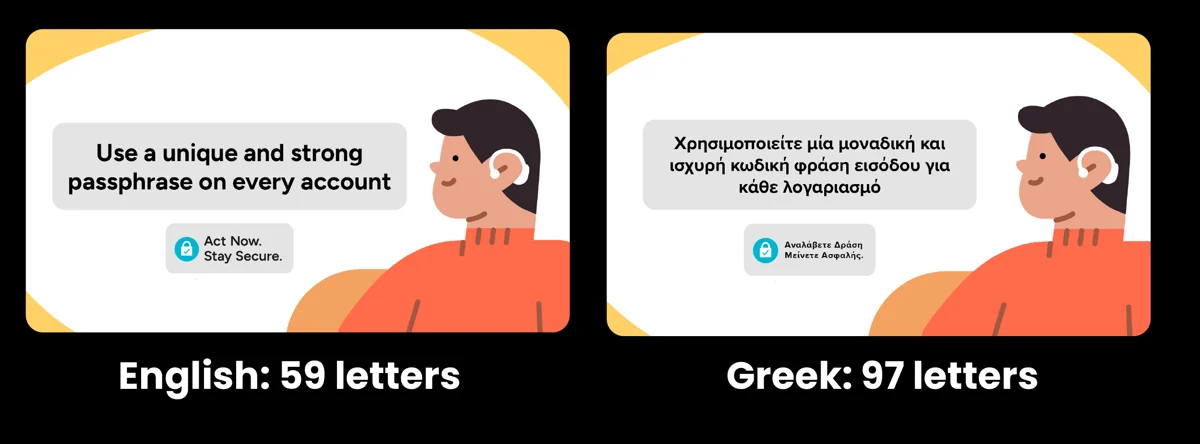
Translating a video properly is also more than swapping out the words. It’s localisation, and that means the voiceover timing, the line breaks, the text direction, and the motion graphics themselves all need to hold up when a language runs longer or shorter than English does. Get that wrong and the video looks unfinished, even if every word is technically correct. Here’s an example from our work with Cultural Perspectives of how much this can shift: an English phrase of 59 characters became 97 characters long once translated into Greek.
To truly make a video accessible, in-language voiceovers are essential. Hearing the language spoken carries something subtitles alone can’t, it makes the video feel made for that audience, not just translated for them.
This is often where retiming comes in: matching the pacing of the animation to the length and rhythm of the spoken translation, since a sentence that takes four seconds in English might take six in another language. Fun fact, in my experience, Arabic often takes twice as long to say as the equivalent English phrase.
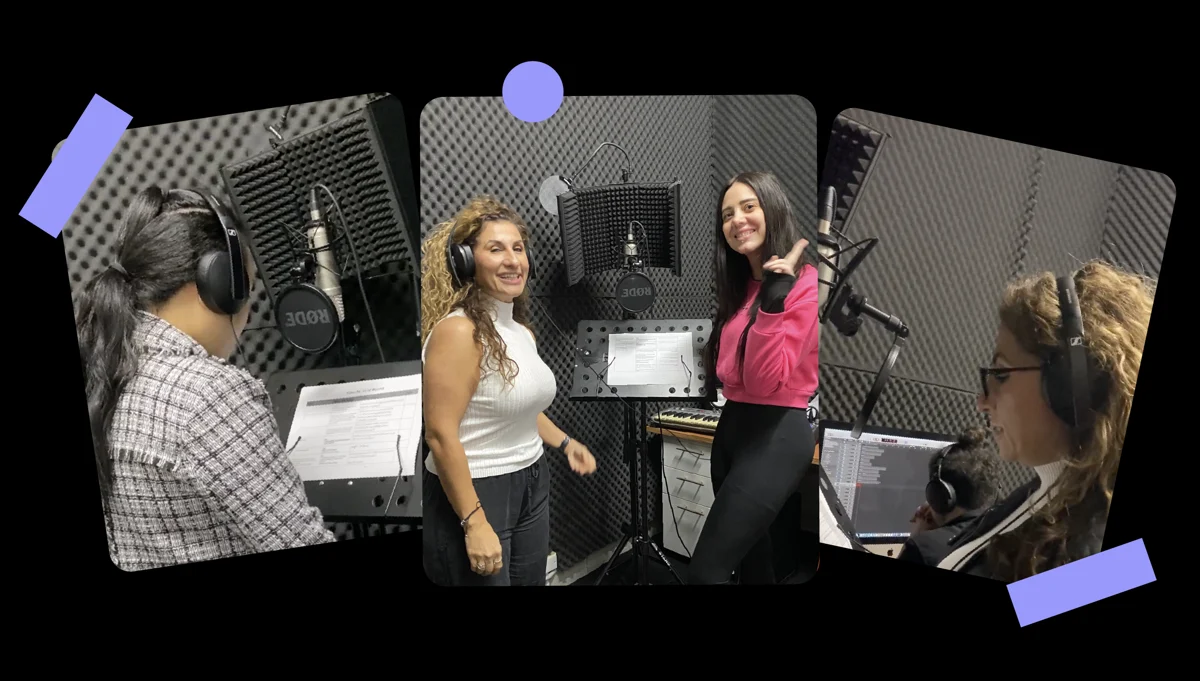
Having a recording studio in our office makes this part of the process much easier, we can record, review, and adjust without needing to coordinate an external studio for every language version. Here’s a look at one of our voiceover recording sessions, this one’s for STARTTS.
When people think about translating a video, they usually picture subtitles or a new voiceover. But some of the most interesting work I’ve done goes further than that: changing the visuals themselves so the video represents the audience it’s being adapted for.
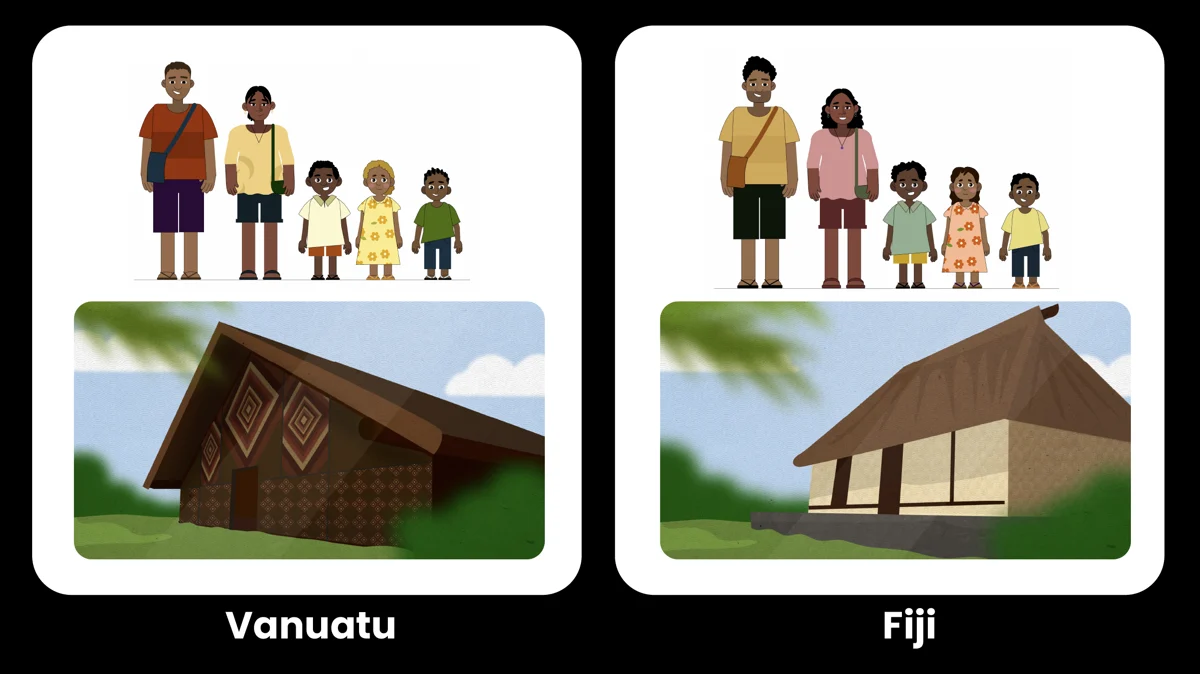
One example is a video I worked on for Family Planning NSW, produced for both a Vanuatu audience and a Fijian audience. While the language needed translating either way, the request went further than that: the characters and backgrounds needed to be adapted for each audience too, so both versions felt like they were made specifically for the people watching, rather than one being a copy of the other. You’ll see below the two comparisons, the scenarios and script stayed the same, but the visuals were adapted to suit each audience.
At the end of the day, it comes back to where I started: a video only does its job if the people watching it can actually understand it, and increasingly, actually see themselves in it. Translation and localisation aren’t an afterthought tacked onto the end of a project, they’re part of making sure the work actually reaches the people it was made for.
