
Over the last two weeks we wrote about consent and about the danger of the single story.
This week: a new report on disability representation, and the question it leaves open.

Inclusively Made has released the Inclusion Imperative Report, a national survey of 2,539 Australians done with Bupa Australia and Atomic 212. The main finding is that disability inclusion has a commercial impact, not just a values one.
15% of Australians switched to a brand with inclusive advertising in the last six months. 53% said they were more likely to recommend a brand that advertises inclusively. But 49% couldn’t name a single brand doing disability inclusion well.
The numbers behind this are worth knowing. One in five Australians live with disability, and their combined household spending is estimated at over $13 trillion a year. That’s before counting the ageing population, who face similar barriers around hearing, vision and mobility. This group also consumes over three hours of media a day, well above the general population. And 70% of Australians, not just people with disability, say it matters that media content is accessible, with captions, audio description and alt text.
When representation is done well, it changes behaviour. Purchase intent rises 74% among 25 to 44 year olds and 69% among 18 to 24 year olds. Bupa’s Paralympic campaign, built with lived experience input from the start, lifted brand trust from 33% to 37% and consideration from 35% to 39% over the campaign period. Woolworths’ Olympic and Paralympic campaign became the number one brand in Australia and number three globally for effective Paralympic advertising, as measured by System1. Neither brand treated inclusion as an add-on.
The report is also clear about what happens when brands get it wrong. 13% of consumers actively avoid brands over poor disability representation, and that number is growing. It names five specific ways brands get called out for tokenism: stereotypical or inaccurate representation, using diversity for optics, actions that don’t match messaging, talking about inclusion without doing much about it, and no lived experience involved in the process.
That last point is where we think the real opportunity sits. The report’s glossary defines disability broadly: visible and non-visible, permanent and episodic, present from birth or acquired later. It separates disability from neurodivergence, mental health conditions and ageing, and notes that neurodivergent identification has grown substantially, meaning older data likely underrepresents it. Most current representation still comes from a narrow slice of that group, mainly because it’s easier to cast and get approved.
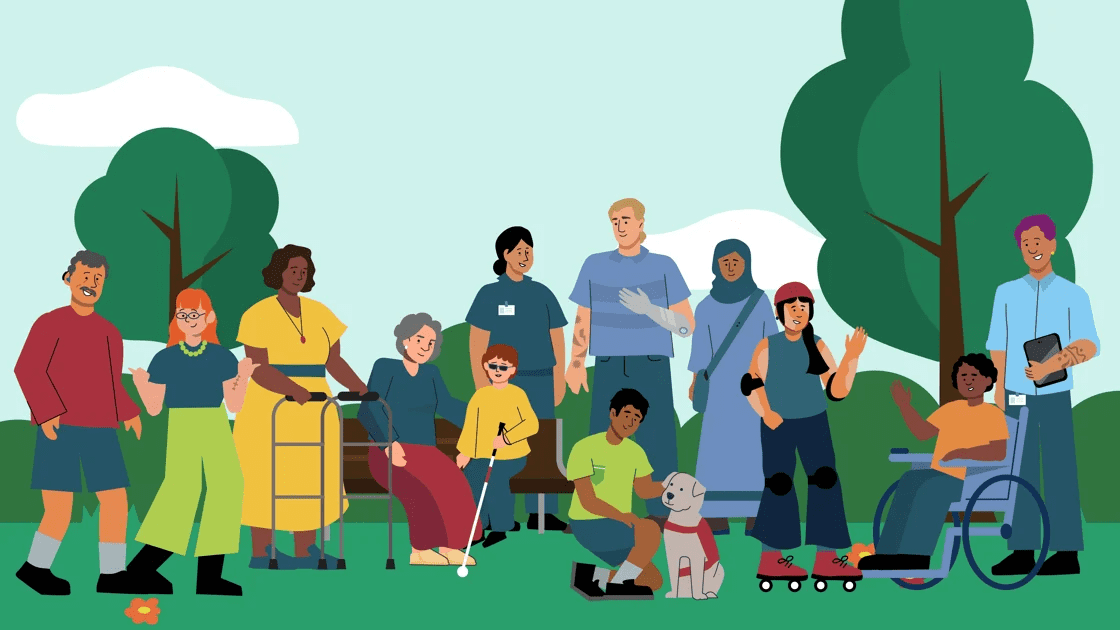
What this means in practice
- Widen the brief before you widen the casting call.
A brief that just says “include a person with disability” will default to whichever disability is easiest to explain in three seconds of footage. Use the report’s categories, visible, non-visible, episodic, neurodivergent, to shape the brief from the start. - Bring in lived experience at the concept stage, not the casting stage.
The report lists this as one of the top five tokenism triggers. By the time casting happens, the story is usually already decided. Bupa and Woolworths both built inclusion in from the earliest brief. - Cast beyond talent agencies.
Disability employment services and community organisations reach people who’ve never been through a casting process, and whose disability isn’t already industry shorthand. - Check consistency, not just casting.
The report flags a mismatch between actions and messaging as a leading cause of tokenism callouts. One inclusive campaign doesn’t offset a workplace or product that hasn’t caught up. - Look back at your own work and see who’s missing.Check content your organisation has already called inclusive and ask which kinds of disability never appeared. That gap tells you more than a new brief will.
